You’ve just bathed your dog… but a day or two later, they smell just as bad as before.
If you’ve ever wondered “Why does my dog still smell after a bath?”, you’re not alone. It’s one of the most common questions dog owners ask.
The truth is, a bath alone doesn’t always solve the problem.
1. Your Dog’s Coat Wasn’t Dried Properly
One of the biggest reasons dogs develop a musty smell is moisture trapped in the coat.
When the undercoat stays damp, it can create the perfect environment for bacteria and yeast to grow, leaving your dog with an unpleasant odour.
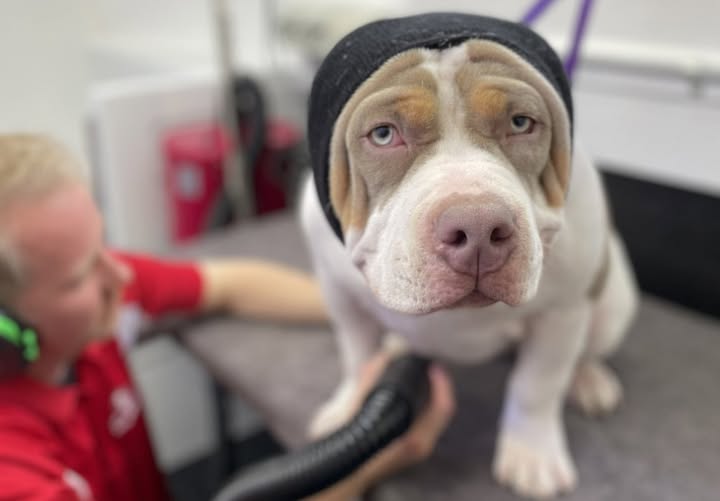
Professional groomers use high-velocity dryers to remove moisture right down to the skin, something that’s difficult to achieve with a towel alone.
2. Your Dog Needs More Than Shampoo
Many owners use whatever shampoo they have on hand, but different coat types have different needs.
Using professional grooming products helps:
- Clean the coat thoroughly.
- Maintain healthy skin.
- Reduce odours.
- Keep the coat soft and manageable.
Using human shampoo is not recommended, as it can upset the natural balance of your dog’s skin.
3. The Smell Might Be Coming From the Ears
Sometimes the coat smells fine—but the ears don’t.
Dogs with ear infections, excess wax or trapped moisture often develop a strong odour.
Signs of an ear problem include:
- A bad smell.
- Redness.
- Head shaking.
- Frequent scratching.
If you notice these signs, it’s best to have your dog examined by your veterinarian.
4. Dental Problems Can Cause Bad Odours
Bad breath isn’t always “just dog breath.”
Dental disease is extremely common in dogs and can produce a strong smell that owners mistake for body odour.
Regular dental care and veterinary check-ups are important for your dog’s overall health.
5. Skin Conditions Can Be the Cause
If your dog continues to smell shortly after bathing, they may have an underlying skin condition such as:
- Allergies.
- Yeast infections.
- Bacterial infections.
- Excess oil production.
A veterinarian can diagnose and treat these conditions if needed.
6. Regular Grooming Makes a Difference
Professional grooming is about much more than washing your dog.
A complete groom helps:
- Remove trapped dirt and loose hair.
- Dry the coat thoroughly.
- Clean areas that are often missed.
- Check for skin issues early.
- Keep your dog feeling fresh for longer.
How Often Should Dogs Be Bathed?
For many dogs, a professional bath every 4–8 weeks is ideal, depending on their breed, coat type and lifestyle.
Dogs that swim frequently, spend lots of time outdoors or have long coats may benefit from more regular grooming.
The Bottom Line
If your dog still smells after a bath, the cause is often something more than a dirty coat.
Proper drying, quality grooming products and regular professional grooming all play an important role in keeping your dog smelling fresh and staying healthy.
And if a persistent odour doesn’t improve with grooming, it’s worth speaking with your veterinarian to rule out any underlying health issues.
A fresh-smelling dog isn’t just more pleasant to cuddle—it’s often a sign of a healthy skin and coat, too.